Johnson, C. (1975): A Review of the palaearctic Species of the Genus Ernobius Thomson - Ent.Bl. 71(2):65-93 >>>"F:\taxa\coleo\scans\Johnson1975 Ernobius.pdf"
Species not listed in this key ...99
#1
→ 2Antennal segments 6-8 very short and slender, together upto half the length of segment 9, and shorter than 3-5 combined (sometimes almost as long in laticollis ♀).
→ 13-Antennal segments 6-8 never so short, frequently quite thick, together always longer than segment 9, and as long or longer than 3-5 combined.
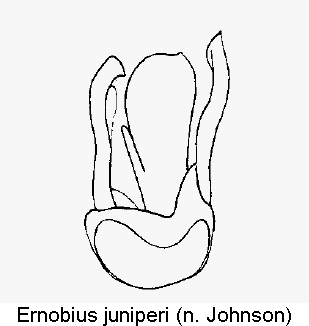
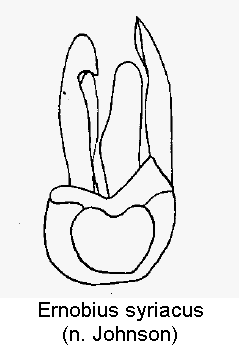
juniperi Chob.🗺Front angles of the pronotum distinct, due to the sides being strongly sinuate (as in longicornis); pronotum not explanate at the sides. Aedeagus [Abb. 1].
Abb. 1
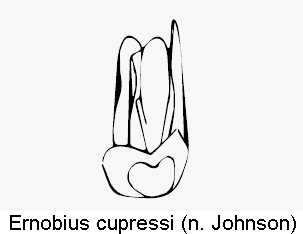
cupressi Chob.🗺-Front angles of the pronotum effaced, the sides close to them not sinuate; pronotum explanate at the sides. Aedeagus [Abb. 2].
→ 5Larger species, 4.5-7.0 mm; surface rather dull; pronotum and elytra coarsely and closely granulate, the granules weakly punctate, the sculpture similar on both; elytra strongly impressed near the shoulders and on each side of the scutellum; dark reddish-brown species.
→ 6-Smaller species, 3.0-4.0 mm; surface more shining; pronotum with less coarse and conspicuously punctate granules; elytra more finely and sparsely granulate or granulo-punctate, the sculpture dissimilar on both; elytra not or feebly impressed; colour typically entirely black, the elytra often lighter, ocasionally entirely dark brown.
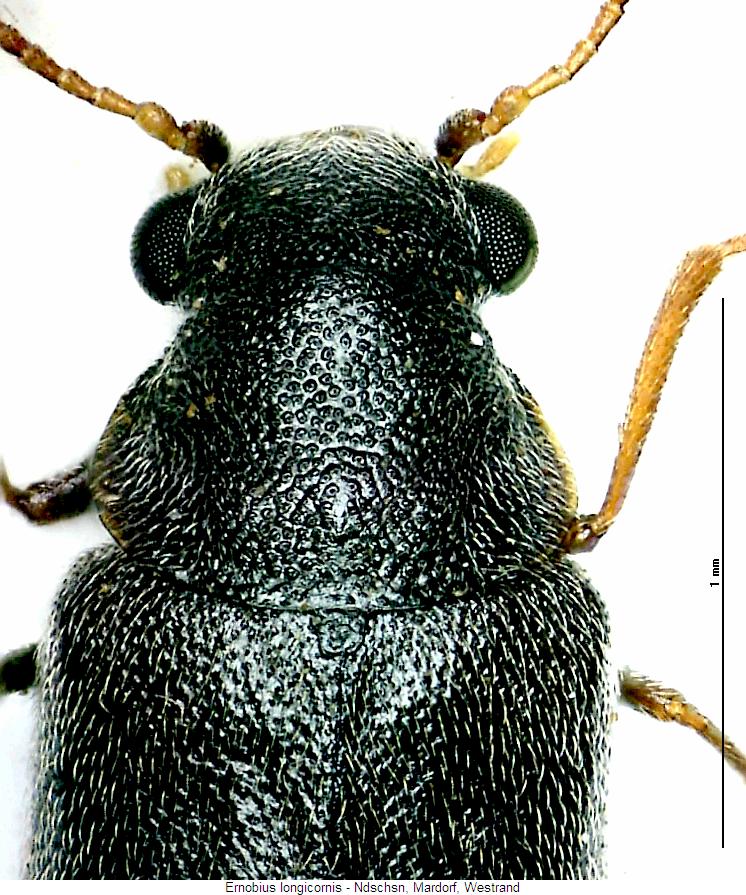
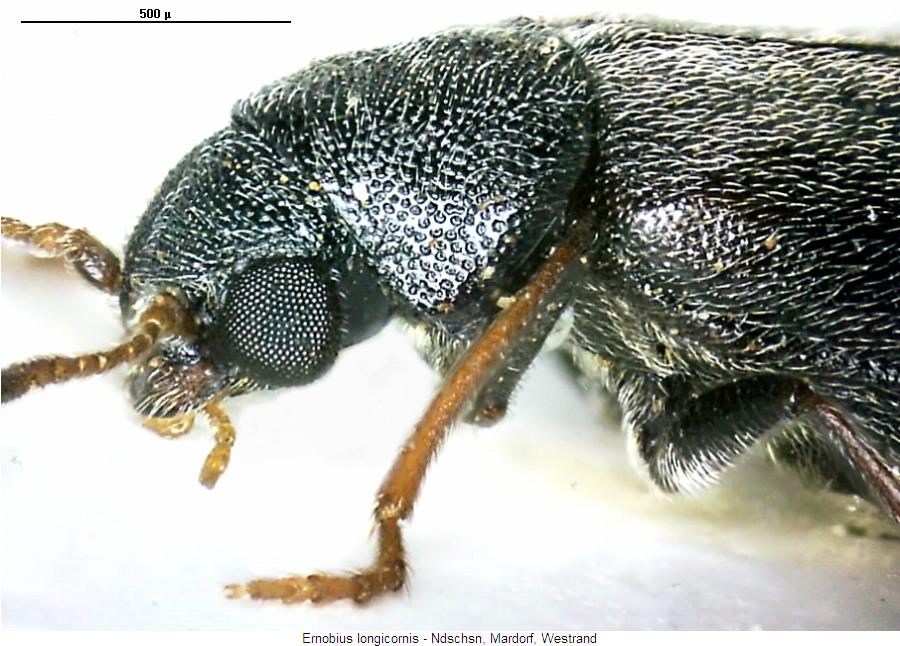
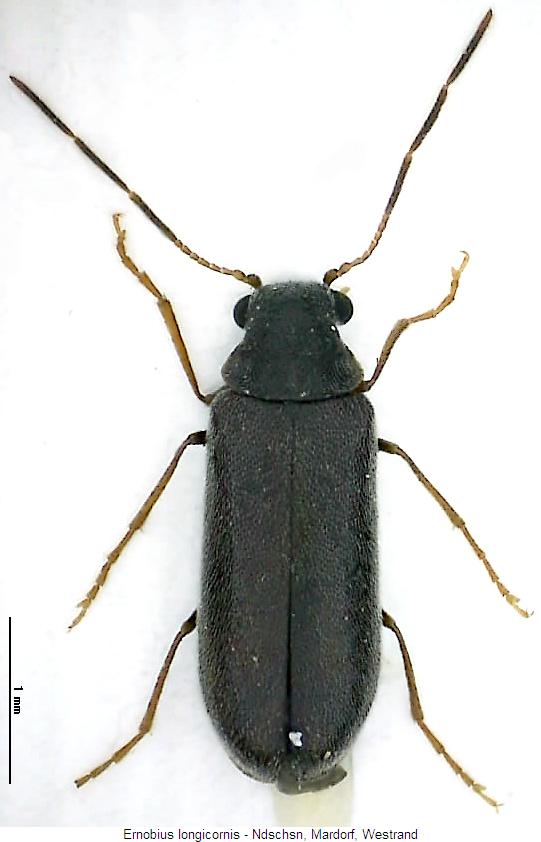
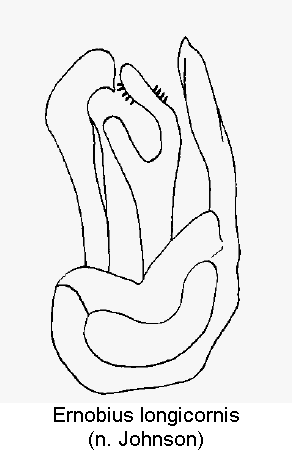
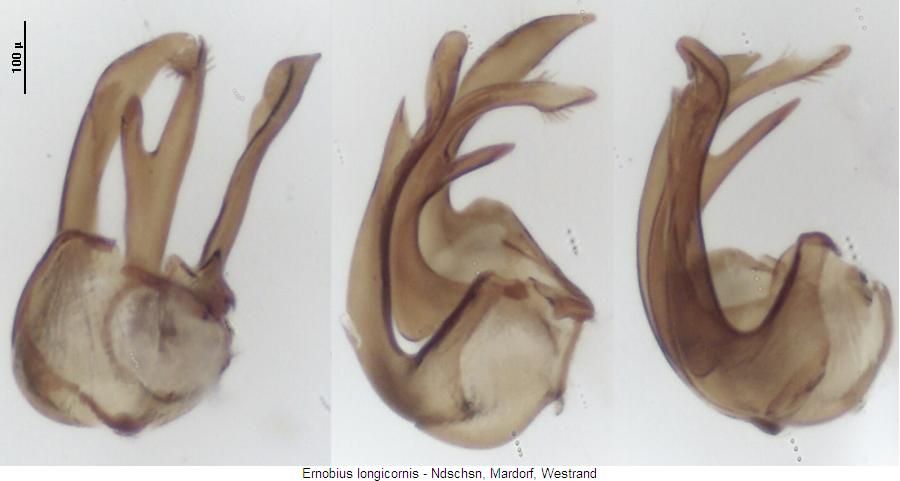
longicornis (Sturm, 1837)🗺Front angles of the pronotum distinct, due to the sides before them being strongly sinuate [Abb. 5][Abb. 6]; elytra more elongate, c. 2.5 times as long as broad [Abb. 7]; antennae reddish-brown; pronotum as broad (♀) or narrower (♂) than the elytra. Aedeagus [Abb. 8][Abb. 9].
Abb. 5Abb. 6Abb. 7Abb. 8Abb. 9
→ 8-Front angles of the pronotum effaced, the sides not sinuate; elytra not so elongate, c. twice as long as broad; antennae usually black.
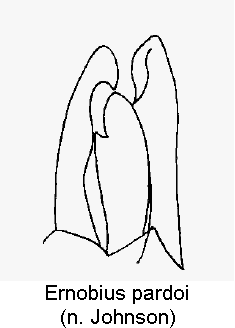
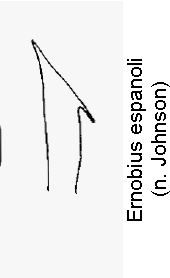
pardoi Espanol🗺Entirely black, except for the elytral apex which is bright reddish-yellow; antennae black, segment 10 obvious bent; segments 6-8 extremely short in ♂. Aedeagus [Abb. 13].
Abb. 13
→ 10-Elytra always unicolorous, various shades of brown; antennae usually brown, very rarely black, segment 10 not or very feebly bent, 6-8 not so short.
→ 11Base of the pronotum clearly sinuate on each side of the middle, the curvature thus uneven; pronotum sparsely covered with larger umbilicate punctures which are predominantly C-shaped, the surface shining.
→ 12-Base of the pronotum not or barely sinuate on each side of the middle, the base and sides thus evenly and continuously curved; pronotum very closely covered with finer umbilicate punctures which are almost circular, the surface somewhat dull; brown species.
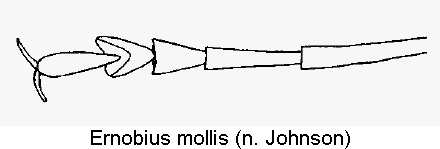
→ 14Dorsal surface of tarsal segment 4 with the apical excavation not or barely surpassing the middle [Abb. 18]; mostly larger species, 4.0-6.0 mm, very rarely as small as 3.0 mm. Tarsal segment 5 long and narrow in most species. Aedeagus of a similar basic form [Abb. 19].
Abb. 18Abb. 19
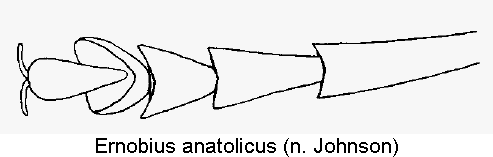
→ 19-Dorsal surface of tarsal segment 4 with the apical excavation clearly surpassing the middle, generally occupying at least three-quarters of the length of the segment [Abb. 20][Abb. 21]; mostly smaller species, 2.0- 4.0 mm, very rarely upto 5.0 mm. Aedeagi of various different forms.
→ 15→ 16Front tibiae conspicuously curved inwards (more so in ♂), at least in their basal half, the apex not or barely turned outwards. Front tibiae straight, the apex clearly turned outwards.
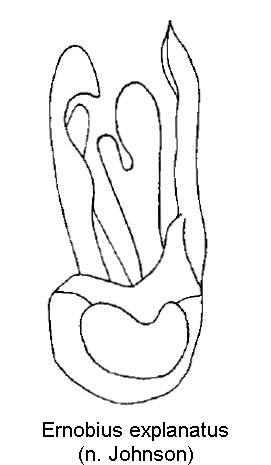
explanatus (Mannh.)🗺Pronotum broadly expIanate at the sides; antennae rather short and thick, segments 6-8 from one to 1.5 times as long as broad; body rather slender; colour usually very dark brown; average size 4.0 mm; tarsal segment 5 long in ♂, short in ♀. Aedeagus [Abb. 19]. North Europe.
Abb. 19
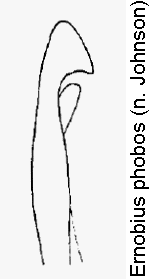
phobos Gottw.-Hooked paramere without a median bulge [Abb. 22]. Central Europe ssp.
Abb. 22
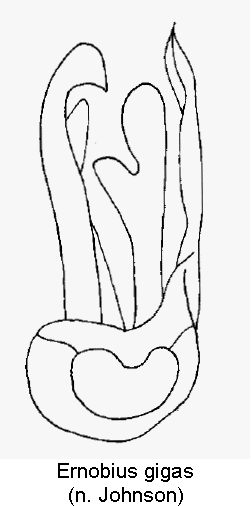
gigas Mulsant & Rey, 1863🗺-Pronotum narrowly explanate at the sides; antennae long and slender, segments 6-8 at least twice as long as broad; body rather broad; colour yellowish / reddish-brown; average size 5.0 mm; tarsal segment 5 long in both sexes. Aedeagus [Abb. 23].
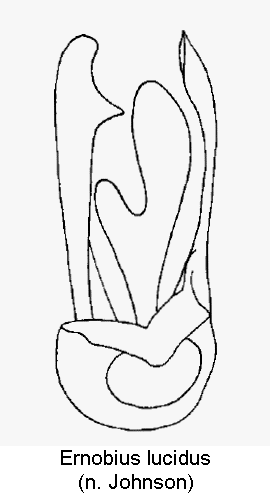
lucidus (Muls. & Rey)🗺Bright yellowish-brown, very shining; pronotum sparsely covered with umbilicate punctures which are C-shaped to nearly circular; pronotal disc longitudinally convex; antennae similar to reflexus. Aedeagus [Abb. 24].
Abb. 24
→ 17-Reddish-brown species, not so brilliantly shining; pronotum very closely covered with finer punctures or granules, umbilicate or otherwise, which are predominantly circular; pronotal disc longitudinally flatter.
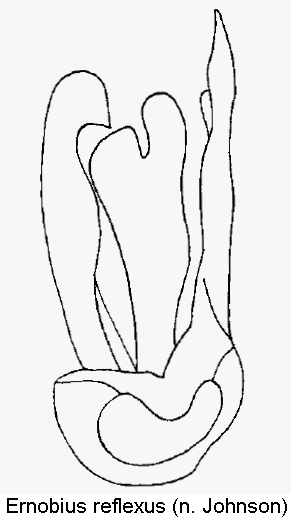
reflexus (Muls. & Rey)🗺Size larger, 5.0-6.0 mm; pronotum very broadly explanate at the sides, which are strongly rounded like the base; pronotal punctures conspicuously umbilicate, more-or-less circular; antenna! segment 8 over half (usually two thirds) the length of 9; pubescence longer, more golden and less depressed than in the next species. Aedeagus [Abb. 25].
Abb. 25
→ 18-Size smaller, 3.0-5.0 mm; pronotum not or only narrowly explanate at the sides, which are not as strongly rounded; pronotal sculpture more granular, not or weakly umbilicate; antenna! segment 8 under half the length of 9 .
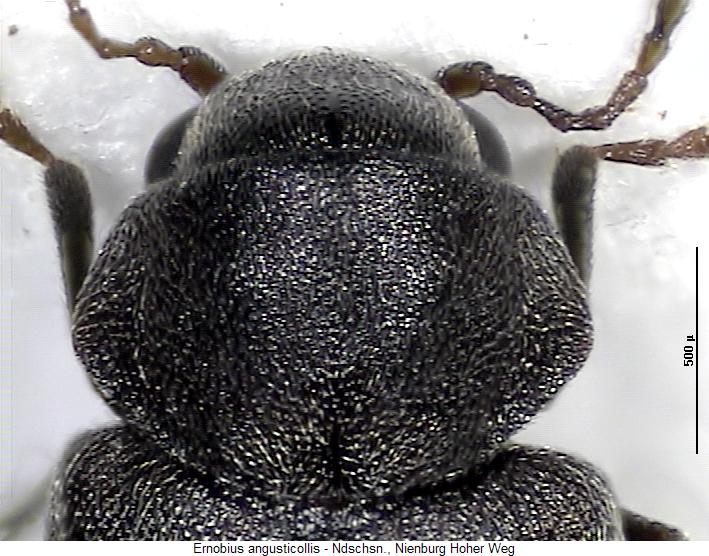
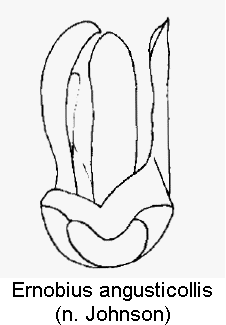
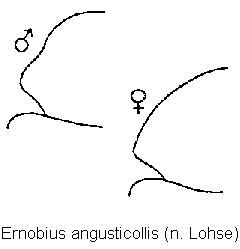
angusticollis (Ratz., 1847)🗺Posterior margin of pronotum strongly oblique on either side, hind angles some distance from elytral base [Abb. 30]; pronotum narrower than elytra, front angles sinuate and distinct, dorsum black except for the brown elytra (♂), pronotum as broad as elytra, front angles effaced and not sinuate, dorsum unicolorous brown (♀); tarsal segment 5 short and broad. Aedeagus [Abb. 31]. [Abb. 32]
Abb. 30Abb. 31Abb. 32
→ 20-Posterior margin of pronotum more-or-less straight, never so strongly oblique on each side, the hind angles more-or-less touching the elytral base; most species entirely brown in both sexes.
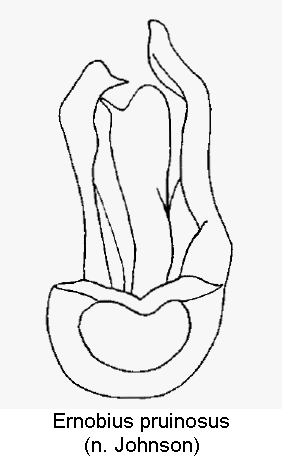
pruinosus (Muls. Rey)🗺Pronotum very dull, with strong reticulation, very closely covered with fine granules which are circular and barely umbilicate. Antenna! segment 8 generally over three-quarters (very rarely barely over half) the length of 9; body long and narrow; pronotum narrower than the elytra (♂), or as broad (♀). Aedeagus [Abb. 33].
Abb. 33
→ 21-Pronotum more shining, without or rarely with weaker reticulation, covered with somewhat larger circular or C-shaped umbilicate punctures / granules.
→ 22Antenna! segments 7 and 8 somewhat similar to 9-11, ie. segment 8 is usually at least three-quarters the length of 9; body long and narrow in one species; pronotum narrower than elytra (♂) or as broad (♀).
→ 23-Antenna! segments 7 and 8 different from 9-11 , ie. segment 8. barely exceeds half the length of 9; body always shorter.
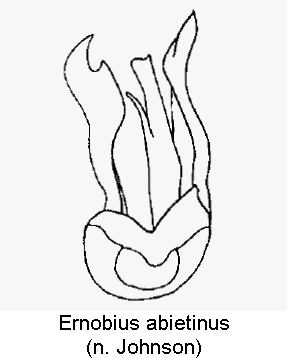
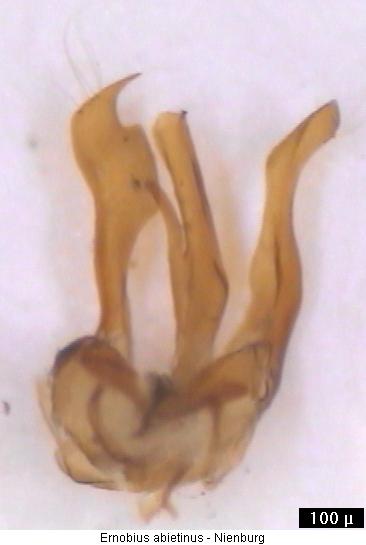
abietinus (Gyll., 1808)🗺Size smaller, 2.0-3.0 mm; body long and narrow; pronotum somewhat sparsely umbilicate-granulate, these almost circular; antennae and tarsi more slender. Aedeagus [Abb. 34][Abb. 35].
Abb. 34Abb. 35
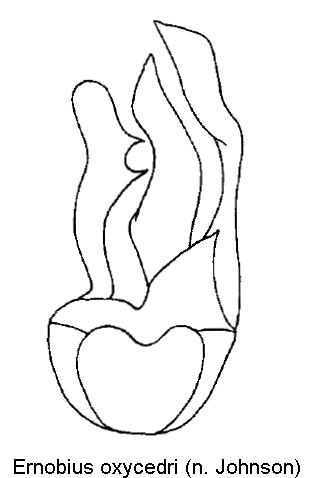
oxycedri Reitt.🗺-Size larger, 3.3-4.0 mm; body shorter and broader; pronotum densely umbilicate-granulate, these circular; antennae and tarsi thicker and broader. Aedeagus [Abb. 36].
→ 24Tarsal segment 5 rather short and broad, the protruding part barely exceeding 1.5 times its greatest breadth in length [Abb. 20]; tarsi more-or- less broad.
Abb. 20
→ 30-Tarsal segment 5 long and slender, the protruding part 2-3 times its greatest breadth in length [Abb. 21]; tarsi narrow.
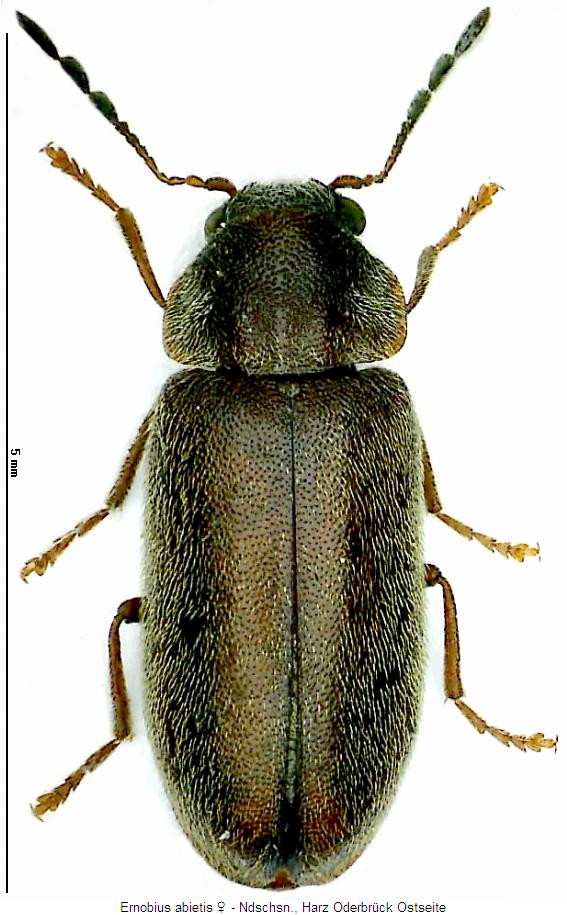
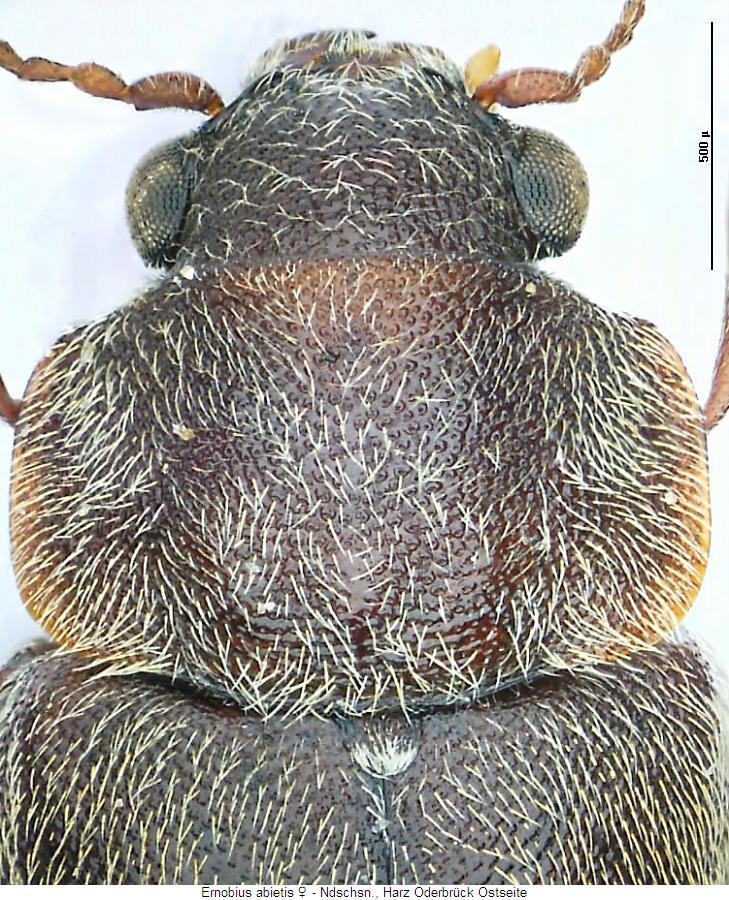
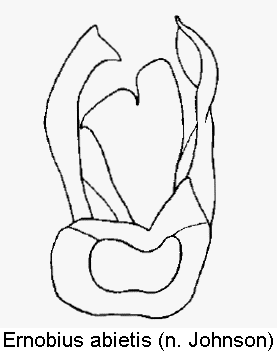
abietis (F., 1792)🗺Tarsal segment 5 very short, the protruding part about as long as its greatest breadth; antenna! segment 9 as long as segments 6-8 combined. Habitus [Abb. 37], detail of front body [Abb. 38]. Aedeagus [Abb. 39].
Abb. 37Abb. 38Abb. 39
→ 25-Tarsal segment 5 not so short, the protruding part almost 1.5 times as long as its greatest breadth; antenna! segment 9 shorter in length than 6-8 combined, generally only as long as 7-8.
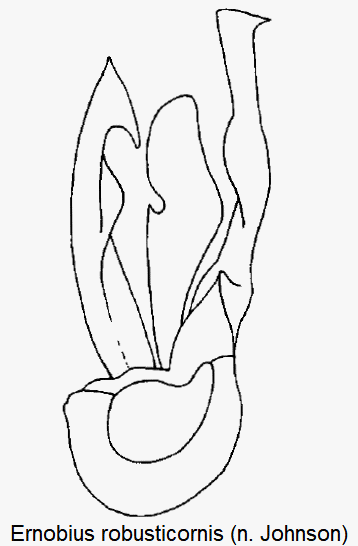
robusticornis Maran🗺Elytral pubescence rather long and semi-erect; pronotum shining, closely covered with umbilicate granules which tend to be more C-shaped than circular, except towards the front; antennal segment 6 shorter than 7. Aedeagus [Abb. 41].
Abb. 41
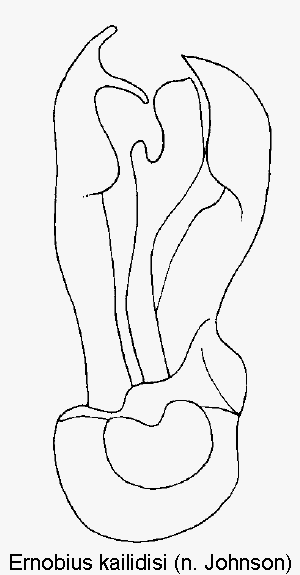
kaiIidisi Johnson, 1975-Elytral pubescence shorter and much more depressed as in most species; pronotum rather dull, very closely covered with smaller, umbilicate and circular granules which are very closely packed together; antenna! segment 6 about as long as 7. Aedeagus [Abb. 42].
→ 29Elytra unicolorous dark brown, its pubescence more-or-less directed rearwards; head almost as broad as the pronotum, the pronotum narrower than the elytra in the ♂. Aedeagus [Abb. 43].
Abb. 43
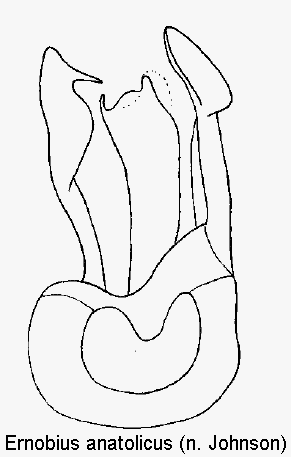
anatoIicus Johnson, 1975-Elytra brown with a black stripe down the suture; elytral pubescence directed inwards from the sides and sutural area, more-or-less rearwards between; head narrower than the pronotum which is as broad as the elytra in the ♂. Aedeagus [Abb. 44].
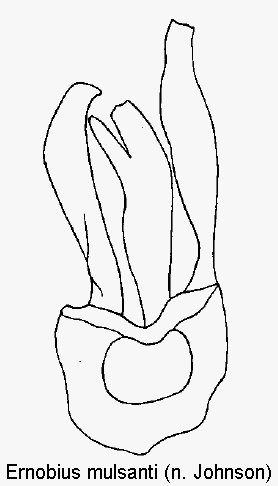
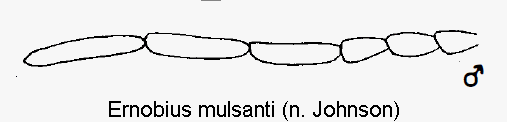
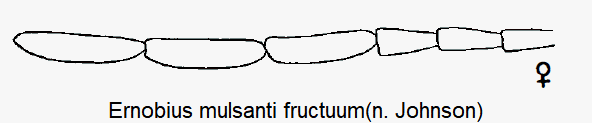
fructuum Peyerh.-Size larger, 4.0-5.5 mm; antenna! segments more elongate [Abb. 46]; pronotum very densely packed with umbilicate granules. North Africa mulsanti ssp.
madoni Pic🗺Major part of the pronotum conspicuously punctured; towards the front there are indistinct C-shaped granules around the punctures; body long and narrow; pronotum narrower than the elytra (♀); dark brown. Cyprus.
→ 31-Pronotum clearly granulate, the granules generally obviously umbilicate; body shorter and broader; chiefly paler brown species.
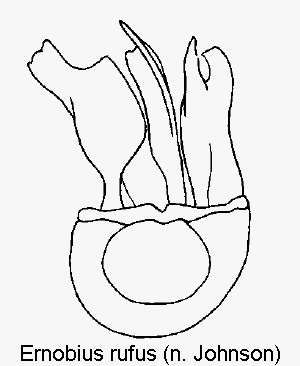
rufus (Illig.)🗺Bright yellowish-brown, very shining as a rule; pronotum broadly explanate at the sides, the hind angles strongly rounded off; elytral pubescence somewhat long and semi-erect; antennae rather long and thick. Aedeagus [Abb. 47].
Abb. 47
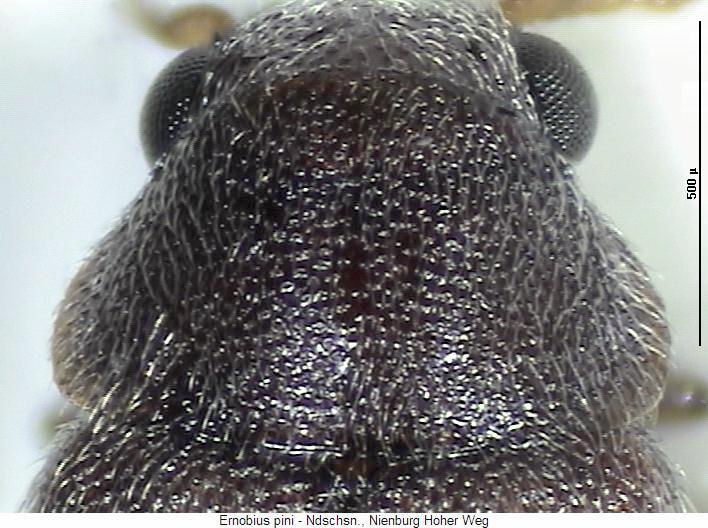
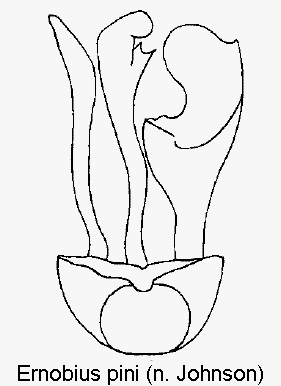
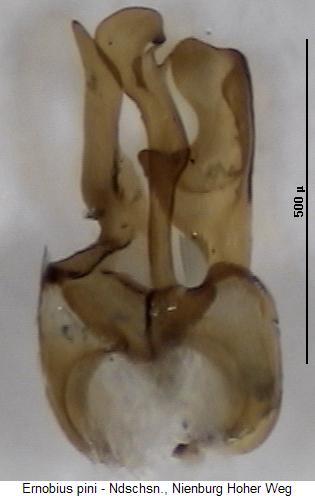
pini (Sturm, 1837)🗺-Reddish-brown, somewhat dull, pronotum narrowly explanate at the sides, the hind angles more angularly curved [Abb. 48]; elytral pubescence shorter and more depressed; antennae shorter and more slender. Aedeagus [Abb. 49][Abb. 50].
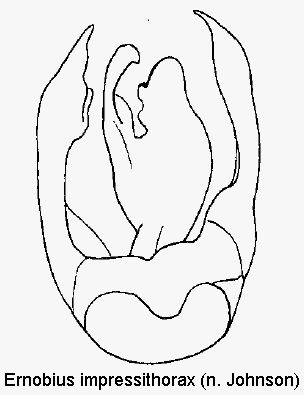
impressithorax Pic🗺Pronotum reticulate, broadly explanate at the sides, including the front angles which are somewhat prominent; elytra dull, finely and very closely granulate; antenna! segment 9 longer than 7 and 8 together, but shorter than 6-8 together, Aedeagus [Abb. 51].
Abb. 51
→ 34-Pronotum at the most narrowly explanate at the sides, the explanation having petered out at the front angles, which are effaced; elytra more shining, not quite so closely granulate; antenna} segment 9 only as long as segments 7 and 8 together.
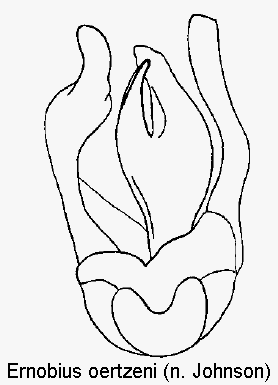
oertzeni Schils.🗺Average ,size larger, 3.0-3.5 mm, very rarely down to 2.5 mm; pronotum generally somewhat dull due to being finely but clearly reticulate; pronotum closely covered with fine umbilicate granules. Aedeagus [Abb. 52].
Abb. 52
→ 35-Average size smaller, 1.7-3.0 mm; pronotum usually rather shining, only very rarely reticulate.
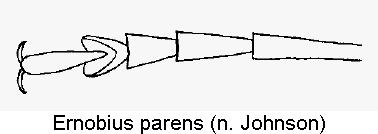
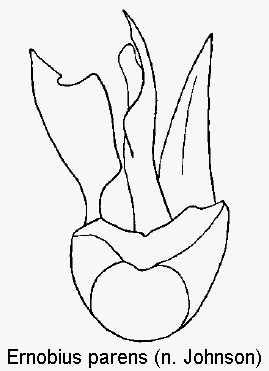
parens Muls. & Rey🗺Sides of the pronotum clearly explanate and thus somewhat flattened almost upto the front angles; pronotum shorter, generally with larger and more scattered umbilicate granules. Aedeagus [Abb. 53].
Abb. 53
→ 36-Sides of the pronotum hardly explanate at any rate in front of the middle, not or barely flattened except near the hind angles; pronotum generally a trifle longer, with slightly smaller and more dense umbilicate granules.
 🗺
🗺 Front angles of the pronotum distinct, due to the sides before them being strongly sinuate [Abb. 5] [Abb. 6]; elytra more elongate, c. 2.5 times as long as broad [Abb. 7]; antennae reddish-brown; pronotum as broad (♀) or narrower (♂) than the elytra. Aedeagus [Abb. 8] [Abb. 9].


 Käfer Europas herausgegeben von Arved Lompe sind lizenziert unter den Bedingungen der Creative Commons International 4.0 Lizenz BY-SA (Namensnennung-Weitergabe unter gleichen Bedingungen)