Yunakov N.N. & Nadein K.S. (2006): New taxa of geophilic Entiminae (Coleoptera: Curculionidae) from the Balkan Peninsula, Caucasus, and Central Asia. - Entomologische Abhandlungen, 63:77-98 >>>"F:\taxa\coleo\scans\Yunakov&Nadein2006 Entiminae.pdf"
#1
→ 2Rostral dorsum not separated from frons by strong transverse impression [Abb. 1]. Eyes situated significantly lower than surface of frons. Elytral intervals with divided small scales. Median lobe of aedeagus weakly sclerotized, before apex with lobes or at least their tracks. Apophyses about three times as long as median lobe. Manubrium of tegmen clearly swollen and curved at apex. Endophallus with one spiculiform sclerite at apex and with areas of small thorns at almost all surface. Subgenus Eurosphalmus s.str.
Abb. 1
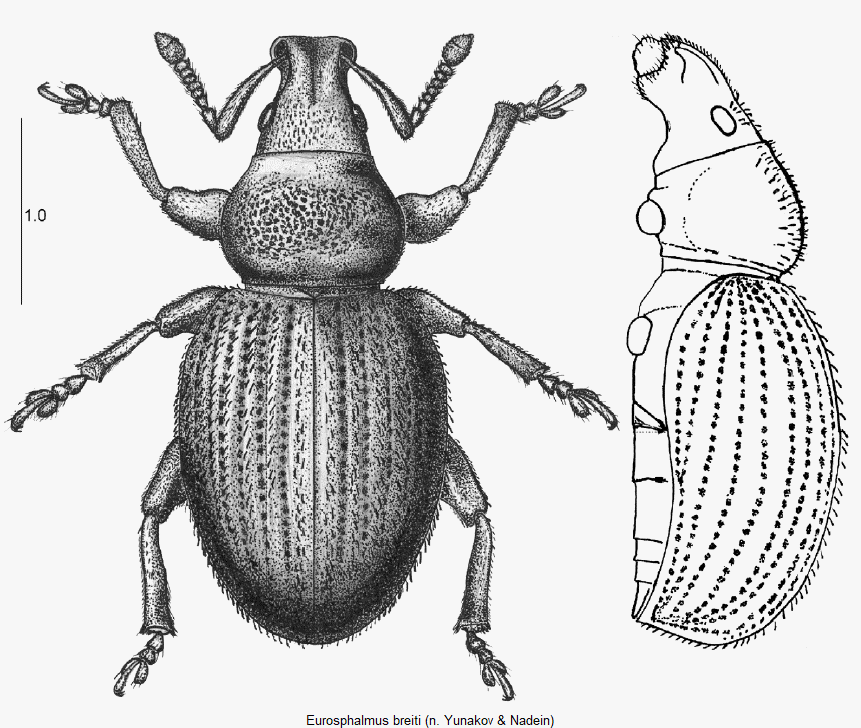
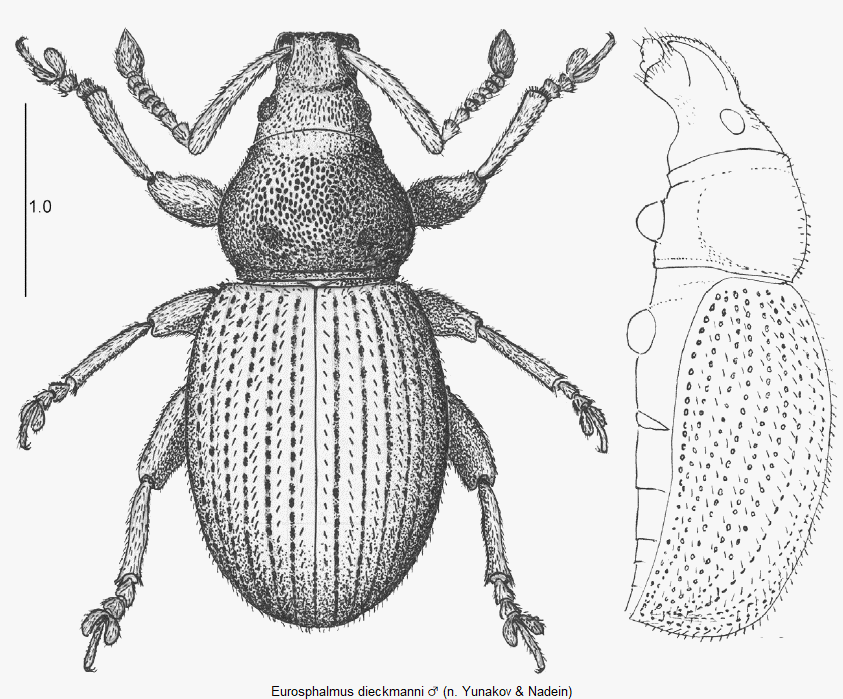
→ 5-Rostral dorsum separated from frons by more or less strong transverse impression [Abb. 2]. Eyes situated very close to surface of frons. Elytral intervals without divided small scales. Median lobe of aedeagus strongly sclerotized and evenly narrowed to apex and sharpened at end, without any tracks of lobes. Apophyses about two times as long as median lobe. Manubrium of tegmen thin or thick but always equally wide at all extent, not curved at apex. Endophallus with very large sclerites and areas of small teeth in basal half. Subgenus Rhinomiamima Yunakov & Nadein, 2006
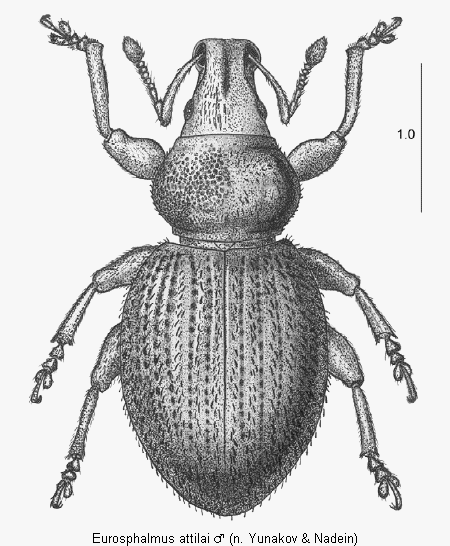
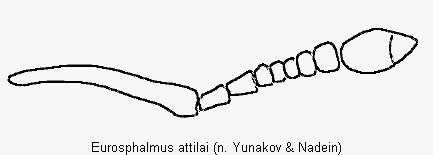
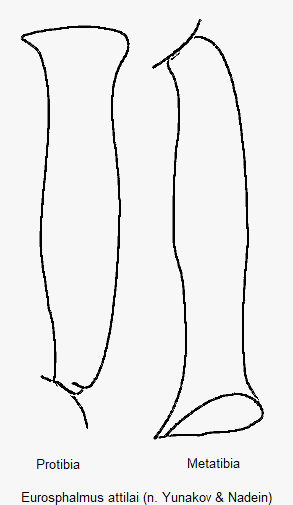
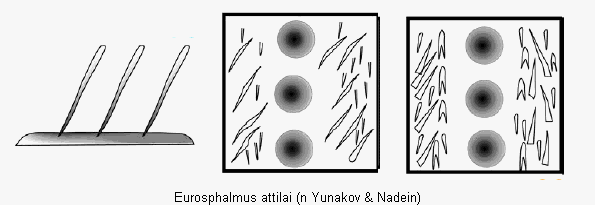
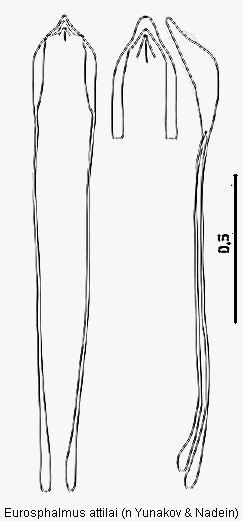
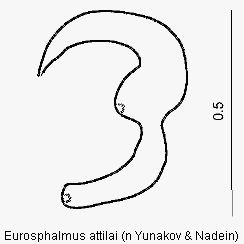
attilai Yunakov & Nadein, 2006Habitus [Abb. 3]. Antennae thin and long (scape at base half thin, then sharply widened to apex [Abb. 4]), eyes flattened, pronotum evenly convex at sides. ♂ metatibia with strong cut [Abb. 5]. Body scale cover: setae on elytra distinctly wider and stronger inclined, widened to apex, rounded at end, close-fitting scales on elytral intervals denser [Abb. 6]. Aedoeagus [Abb. 7]. Spermatheka [Abb. 8].
Abb. 3Abb. 4Abb. 5Abb. 6Abb. 7Abb. 8
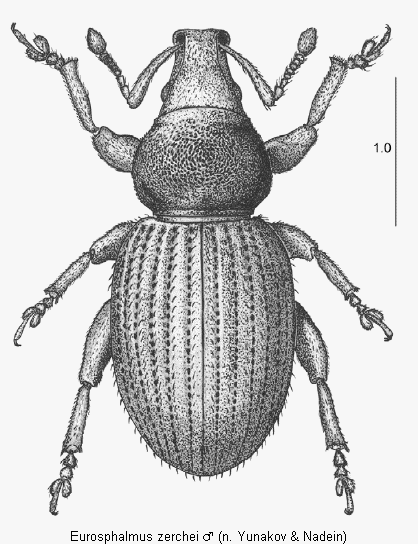
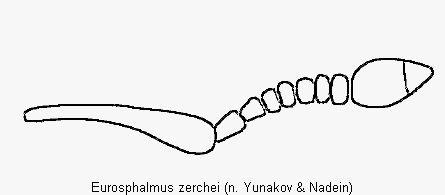
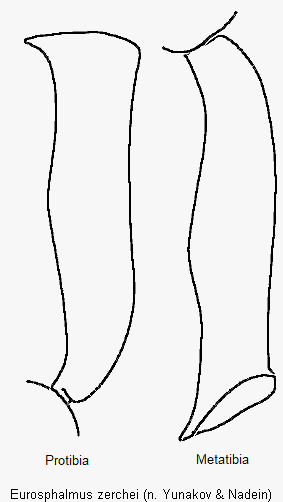
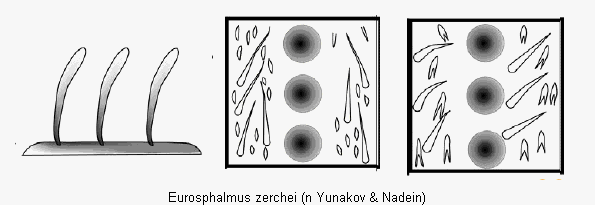
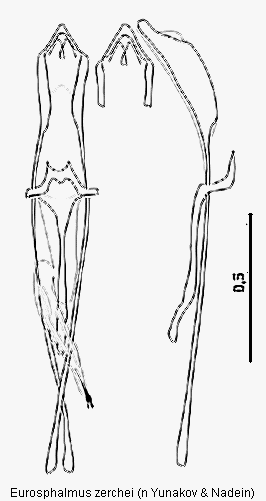
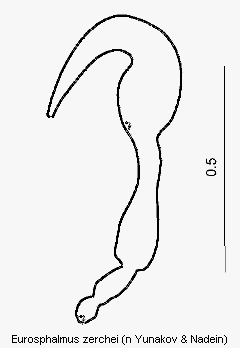
zerchei Yunakov & Nadein, 2006-Habitus [Abb. 9]. Antennae wider and shorter (scape widened from second 1/3 [Abb. 10]), eyes strongly convex, pronotum strongly convex at sides, widest behind its middle, ♂ metatibiae with weak cut [Abb. 11]. Body scale cover: setae on elytra short, weakly inclined, parallel-sided or weakly narrowed to apex, at end sharpened, close-fitting scales on elytral intervals rarefied [Abb. 12]. Aedoeagus [Abb. 13]. Spermatheka [Abb. 14]. (For my impression the description does not match the schematic drawings.)
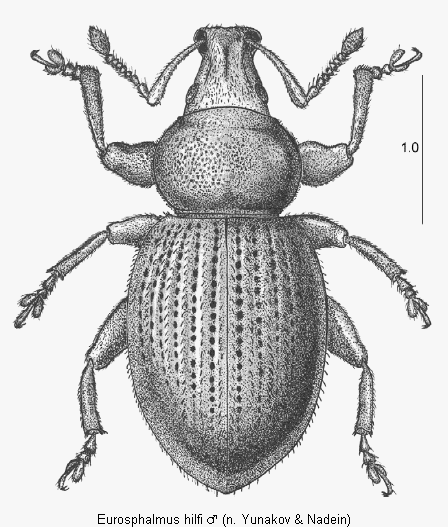
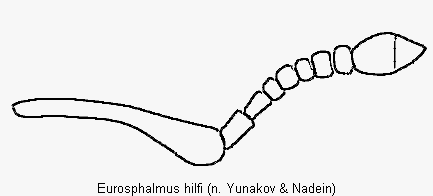
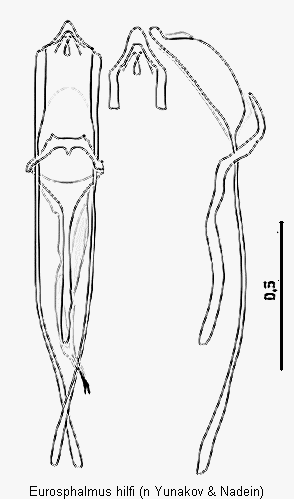
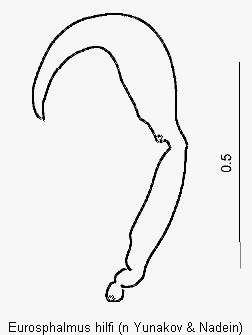
hilfi Yunakov & Nadein, 2006Habitus [Abb. 15]. 2nd segment of funicle clearly elongate [Abb. 16], pterygia weaker developed. Median lobe of aedeagus before apex with less developed lobes [Abb. 17], spermatheca with strongly elongated worm-shapes ramus [Abb. 18].
Abb. 15Abb. 16Abb. 17Abb. 18
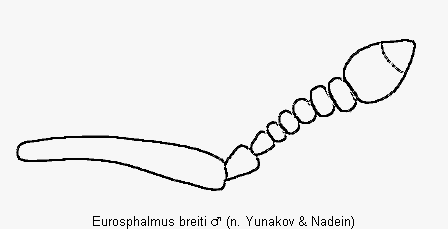
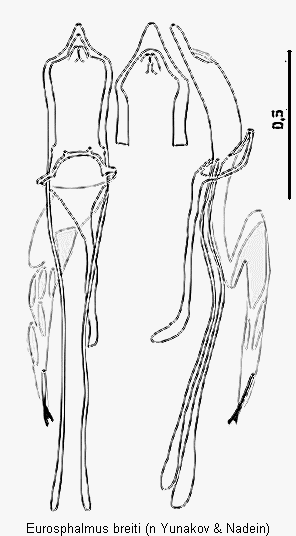
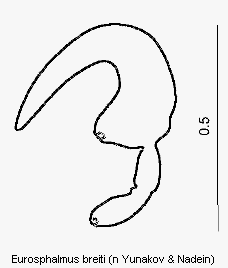
breiti Formnánek, 1909-Habitus [Abb. 1]. 2nd segment of funicle short, almost as long as wide [Abb. 19], pterygia strongly developed. Median lobe of aedeagus before apex with strongly developed lobes [Abb. 20], spermatheca with shortened C- shaped ramus [Abb. 21].
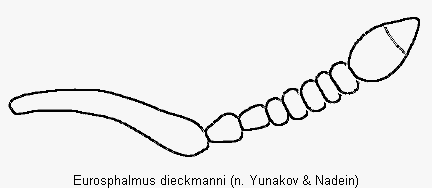
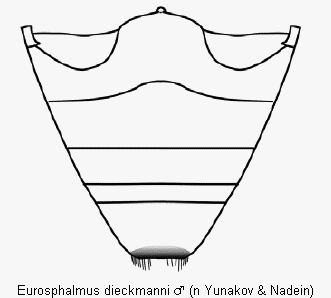
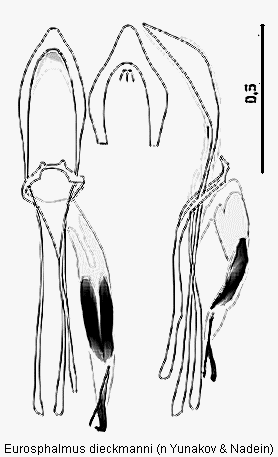
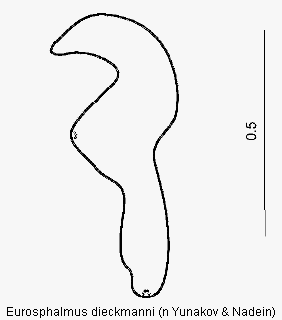
dieckmanni Kostal, 1988Habitus [Abb. 2]. Antennae thick, scape distinctly curved [Abb. 22]. Rostral dorsum wider, separated from frons by weakly developed transverse impression. Lower surface of rostrum and gular area of head make obtuse angle. Pronotum strongly transverse (ratio of width to length = 1.16-1.40), front margin of 1st ventrite concave [Abb. 23], ♂ anal ventrite more convex and wider. Aedeagus larger with weakly sharpened elongated plate-shaped tip of median lobe [Abb. 24]. Spermatheka [Abb. 25].
Abb. 2Abb. 22Abb. 23Abb. 24Abb. 25
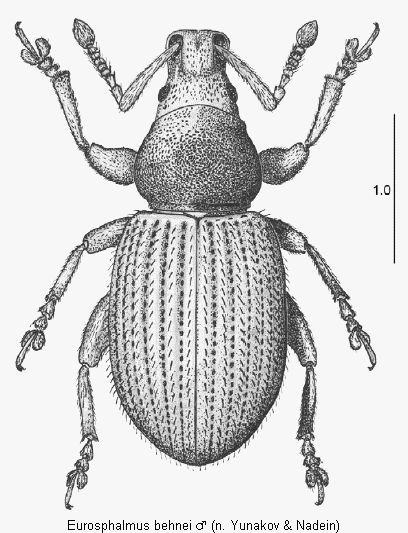
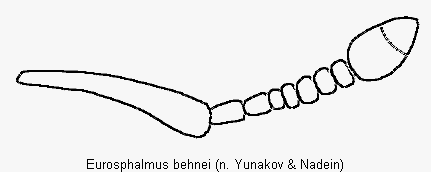
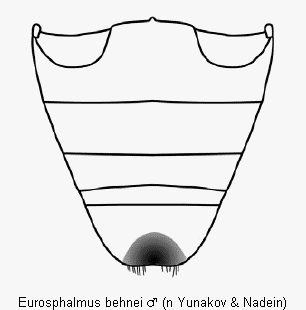
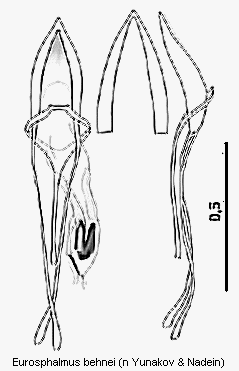
behnei Yunakov & Nadein, 2006-Habitus [Abb. 26]. Antennae thinner, scape almost straight [Abb. 27]. Rostral dorsum narrow, separated from frons by strong transverse lowering. Lower surface of rostrum and gular area of head make almost right angle. Pronotum weakly transverse (ratio of width to length =1.1), front margin of 1st ventrite straight [Abb. 28], ♂ anal ventrite weakly convex and wide. Aedeagus smaller, with strongly sharpened elongated tip of median lobe [Abb. 29].
 Käfer Europas herausgegeben von Arved Lompe sind lizenziert unter den Bedingungen der Creative Commons International 4.0 Lizenz BY-SA (Namensnennung-Weitergabe unter gleichen Bedingungen)